作者: admin

  • Tan Xiaozheng’s Journey of Healing and Restarting

    Tan Xiaozheng’s Journey of Healing and Restarting

    There’s always a part of life that nobody can predict.

    For Tan Xiaozheng, that moment arrived suddenly in 2016, when he was diagnosed with acute transient psychotic disorder and depression.

    The time he spent in a psychiatric hospital was the lowest point of his life. Locked wards, medication, racing thoughts, and the feeling of losing control over his own mind. Even his sense of dignity seemed stripped away.

    But strangely, those extreme experiences didn’t break him.

    Instead, they awakened something simple and powerful: he didn’t want to become a broken person. More than anything, he wanted to feel normal again.

    Every step after leaving the hospital became part of a years-long journey of self-healing and rebuilding.

    2017–2019: Rebuilding from the Rubble

    As soon as he was discharged, Tan threw himself back into work. He wanted to prove—to himself more than anyone else—that he still had value.

    Between 2017 and 2018, he traveled constantly between Chengdu and Beijing, organizing animation investment roadshows.

    By 2018, his company had reopened and was operating again.

    At the end of 2018 and into early 2019, he made three separate trips to Shenzhen, paying out of pocket to attend IP and branding programs in order to recharge and relearn.

    Then came 2019.

    He landed a major brand-upgrade project for one of Chengdu’s leading food companies.

    That same year, the Chinese animated blockbuster Ne Zha became a nationwide phenomenon. As one of the first-generation animation graduates from the Central Academy of Fine Arts and someone who had spent years promoting Chengdu’s animation industry, he felt an enormous sense of relief.

    For the first time in years, it seemed like the world was finally catching up to a dream he had never stopped believing in.

    2020–2022: Pandemic, Isolation, and Learning to Connect Again

    Just as hope was returning, the pandemic hit.

    Tan had always been a solo entrepreneur, running a one-person company for most of his career. During COVID, business slowed to a crawl. Debt piled up. Income disappeared.

    At his lowest point in 2020, he turned his emotional struggles into a creative project.

    That project became Black Rabbit & Pink Pig, a four-panel comic series that eventually grew into more than 200 episodes.

    The stubborn Pink Pig and the realistic Black Rabbit became symbolic versions of himself—characters through which he could process anxiety, loneliness, and hope.

    But creativity alone wasn’t enough.

    By 2022, years of isolation and psychological pressure had left him feeling disconnected from people.

    So he made an unusual decision.

    He became a local lifestyle blogger on Xiaohongshu.

    He visited cafés, bars, and hidden corners of the city. He forced himself into conversations with strangers. To outsiders, it looked like content creation.

    To him, it was rehabilitation.

    He was training himself to be social again.

    He was learning how to be part of the world.

    2023–2025: Reinvention Through Silence and Survival

    After pandemic restrictions ended, the market remained quiet.

    In 2023, Tan returned to the art world and officially relaunched Backwall, an independent arts media project he had originally founded years earlier.

    Instead of writing distant academic criticism, he focused on something simpler:

    real people.

    Artists trying to survive.

    Creators searching for meaning.

    Ordinary stories behind exhibitions.

    But transformation takes time, and bills still need to be paid.

    To keep himself moving—and to avoid falling back into depression—he let go of any attachment to status.

    He rented out rooms.

    Worked in restaurant kitchens.

    Drove ride-share cars.

    Sold insurance.

    He did whatever was necessary.

    In those years, he met countless ordinary people who were struggling just as hard as he was.

    And that changed him.

    In 2025, he officially dissolved the company he had operated since 2011.

    After more than a decade, he chose to say goodbye.

    No bitterness.

    No drama.

    Just gratitude and a lighter backpack for the road ahead.

    2026: Using AI to Navigate Uncertainty

    Then came AI.

    While many people were afraid of it, Tan wasn’t.

    After surviving hospitalization, debt, career setbacks, and years of uncertainty, AI didn’t feel threatening.

    It felt like a tool.

    A teammate.

    Using AI, he began rebuilding and organizing the work of the last twenty years.

    Through Tanxiaozheng.com, he started digitizing the archives of Dongkoh, founded in 2004, and Backwall, founded in 2005.

    Years of interviews, industry observations, creative projects, and intellectual property were given new life.

    People in the art world often joke:

    “Backwall never stops.”

    “Tan works too hard.”

    What they rarely see is the fear underneath.

    Ever since leaving the hospital, he has carried one quiet fear:

    What if one day I lose myself again?

    The constant writing.

    The endless organizing.

    The relentless publishing.

    In many ways, they are not just work.

    They are a survival system.

    A backup drive for memory, reason, and meaning.

    A way of preserving his connection to the world.

    Chengdu Art Calendar:

    A Simple Way to Support the Exhibitions You Love

    All of those experiences eventually led to something practical.

    Something useful.

    Something built by one person with the help of AI.

    The Chengdu Art Calendar mini-program is now live.

    No complicated registration.

    No unnecessary steps.

    Just open it and use it.

    Browse exhibitions by date.

    Get directions with one tap.

    Save the shows you love.

    The app automatically ranks exhibitions based on how many people have bookmarked them, turning every simple “favorite” into a vote of support for local art.

    No lectures.

    No gatekeeping.

    Just a simple tool for discovering exhibitions and connecting people with culture.

    Search for “Chengdu Art Calendar” on WeChat and start tracking your next exhibition visit.

    As long as the lights come back on, every step forward counts.

    Every step is part of the journey.

    http://tanxiaozheng.com/

  • Where Has the Heart Gone? A person who has been painting through twenty-three years of turbulence.

    Where Has the Heart Gone? A person who has been painting through twenty-three years of turbulence.

    She wakes up in pain every morning.


    But she doesn’t tell anyone. She goes to school, acts fine in front of colleagues, treats it like professional dedication. “When people say they can’t tell, that’s when I’m happiest. Because I take it as a sign of professionalism.”


    This is Mickey. Twenty-three years ago, she was painting. Twenty-three years later, she’s still at it.


    A lot happened in between. Moves, identity crises, her husband’s work falling through, constant physical pain, a cat that had been with her for years, and countless moments of asking what’s the point of painting any of this.


    She didn’t stop. Not because she didn’t want to. She couldn’t stop.


    “You’ve spent so much, built up so much, and then—boom—everything’s gone.”


    This isn’t just the predicament of making art. It’s a metaphor for life. She’s been through too many “booms.” Mickey is a parasitic creator.


    Her paintings can’t grow in a vacuum. They have to attach themselves to the structures of real life—pressure, collision,来往, the trivial stuff.


    Two things running in parallel isn’t distraction. It’s a way of keeping herself from caring too much about any single one. “When you pour everything into one thing, your attachment to results gets heavier. That’s how I am.”


    It’s a form of self-protection. Twenty-three years of life experience taught her that. She knows her ceiling—and she’s clear-eyed about it. “It’s not about the art. My real life is hitting a wall. That’s something art can’t fix.”


    Her predicament isn’t that nobody’s buying her work. It’s that survival itself consumes too much bandwidth, causing twenty-three years of积累 to repeatedly reset to zero.
    The online exhibition is titled Where Has the Heart Gone? 心在何处.


    She doesn’t write detailed descriptions of her own work. The curator, Tan Xiaozheng, wrote poetic introductions to the pieces. She approved.


    She believes some things don’t need to be explained. Explanation is control—and her creation has never been controlled.


    May 21st: the online exhibition goes live. 9:30 PM, a live broadcast on 小红书 (Xiaohongshu). This is the first time in twenty-three years Mickey has appeared in public. She’s still painting.


    Not because she’s good at it. Because stopping would leave her even more at a loss for what to do with herself.


    The exhibition’s title asks a question: Where has the heart gone?


    She may not have an answer. But she’s looking.


    That’s enough.


    Where Has the Heart Gone? is now live. May 21, 2026, 9:30 PM — tune in for a live broadcast on Xiaohongshu: @Backwall.
    Visit the online exhibition:

    Shanghai: http://tanxiaozheng.com/mickey/

    Hong Kong: http://www.backwall.cn/mickey/


    For artwork inquiries, please contact the artist directly or reach out to Backwall official.

  • Insiders Watch 《Ranbiwa》: Loneliness, Confusion, Disorder — And Then?

    Insiders Watch 《Ranbiwa》: Loneliness, Confusion, Disorder — And Then?

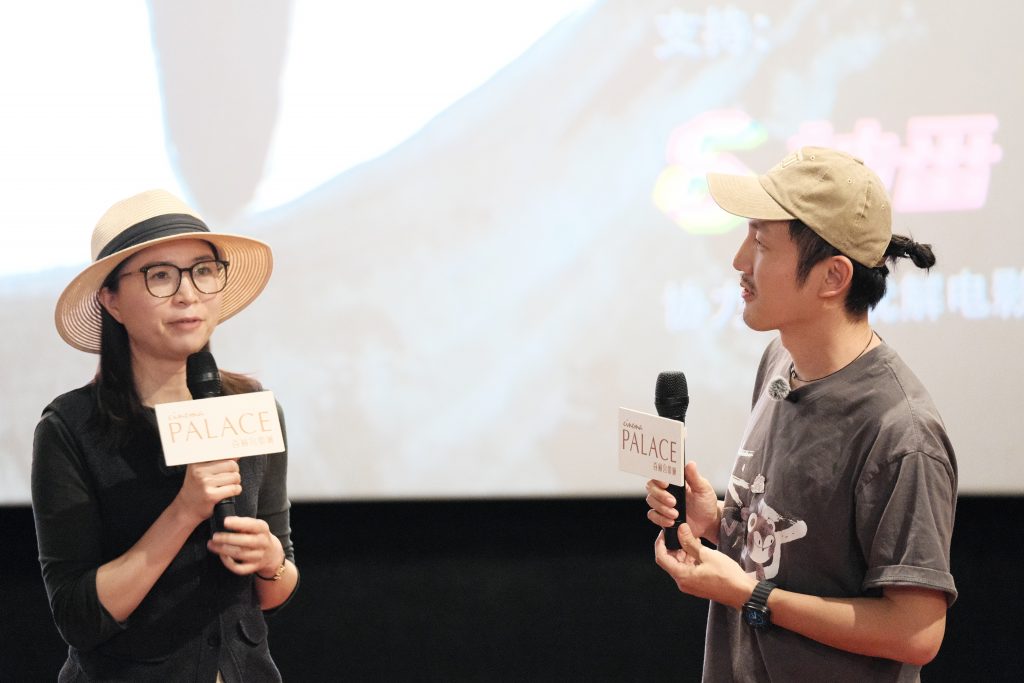
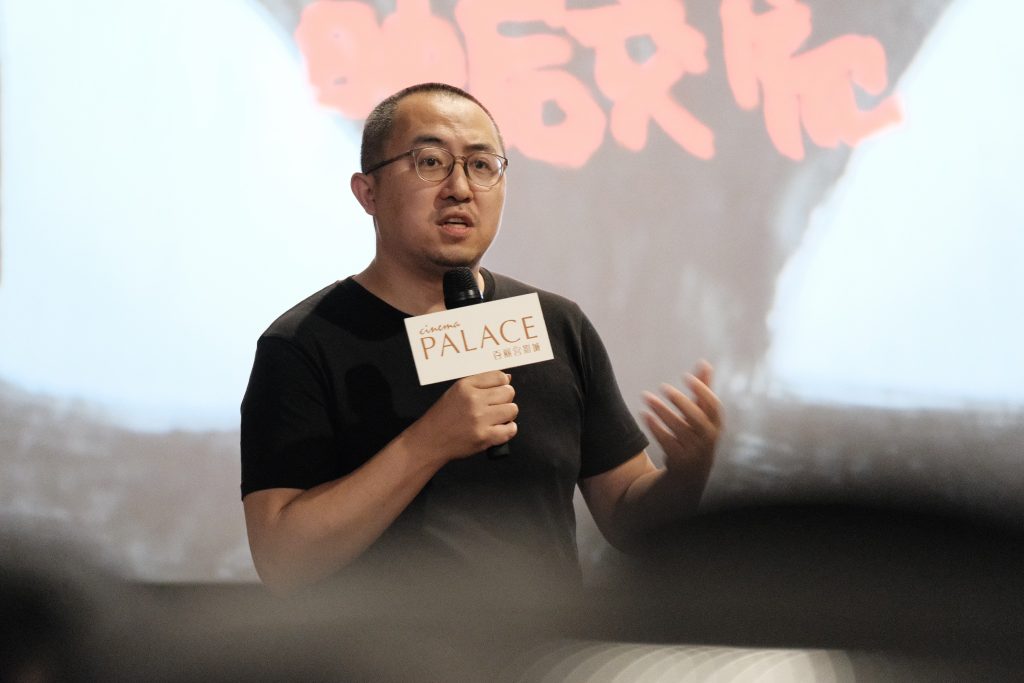
    On the afternoon of May 9, Dongkoh & Backwall, together with PALACE (百丽宫), held a small-scale screening of the newly released animated film Ranbiwa in Chengdu.


    Those in attendance included:
    Fu Sheng, Founder of Shenfan & Qiying (神番&奇影) | Xiong Zihua, Founder of Bear Bear Bear Cartoon (比格熊动漫) | Wang Shixu, Director of Hell’s Gate (《镇魂街》animator) | Da Da, General Producer & IP Operations President at Chengdu Yingda Shuying (成都应答树影业) | Liu Lishuo, Animation Department Faculty at Sichuan Conservatory of Music Chengdu Academy of Fine Arts | Liu Yimin, Animation Department at Chengdu Neusoft University | Zeng Zhilin, General Manager of Chengdu Zhongxing Lele Tourism & Culture Development | Wang Min, Founder & Producer at Chengdu Yaoyao Film (成都妖妖影视) | Meng Meng, Editor at Sichuan Children’s Publishing House | Wei Yutong, Marketing & Planning at Science Fiction World (科幻世界) | Xie Jinwu, Independent Animation, Comic & Game Creator……


    And director Li Wenyu of Ranbiwa.


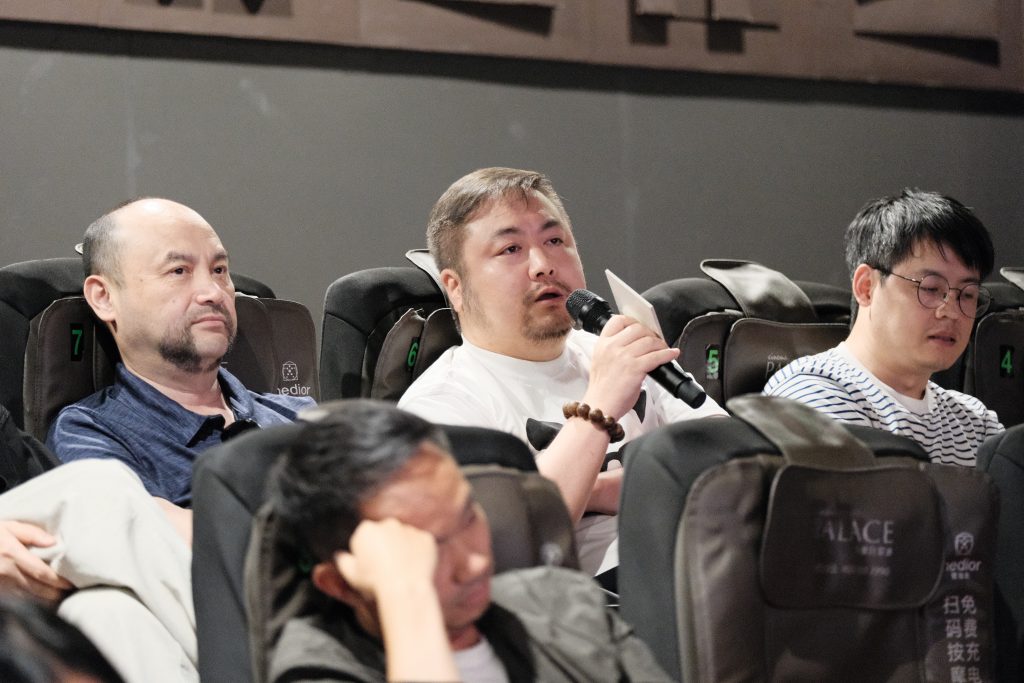
    This was not a typical audience screening. It was a room full of Chengdu’s animation industry insiders, watching a singular Chinese animated film, and talking about how it got made.


    “Like the character — lonely, confused, without direction”


    During the post-screening Q&A, someone asked the director: What is this film actually about?
    He didn’t answer with the plot. Instead, he shared his original intention:
    “I wanted the audience to feel what the character feels — lonely, confused, without direction. He doesn’t know what he’s doing, just wandering lost in the jungle. But gradually, in life, we go through our own journeys too. Slowly, we figure out which way we want to go.”
    It sounded like he was describing the film. It also sounded like he was describing his own five years making it.
    Five years. Fifty thousand hand-painted sheets of rice paper.
    “At the Berlin Film Festival, I felt like my dream had already come true. But later I realized — nothing ever goes according to plan.”


    The Qiang mythology, reimagined as something else


    The film is based on an oral myth from the Qiang people of Ngawa, Sichuan. The director said his original idea was to make a story “about growth, about companionship.” A friend from the Qiang region told him: their legend has it that “apes became humans thousands of years before Darwin’s theory.” The method of fire-starting was different too — two white stones struck together, unlike the versions found in most other myths.
    He grafted his original concept onto this myth, but the adaptation was substantial — he worked with “one possibility behind the legend,” told that possibility out loud, and let it become legend through oral retelling.
    “There are many deliberate choices in the film. For example, the shadow puppet scene — I made sure to show the audience it’s fake. Shadow puppets couldn’t scare away any beasts. That was the point: to remind viewers that this is a story being told.”
    The narration was added later. During test screenings, audiences didn’t follow the story, so he introduced a narrator — simulating the way Qiang elders tell stories to their people. An adult telling a tale, with embellishment, with exaggeration, perhaps even with things that aren’t quite true.


    “If you had one more chance, which version would you choose?”


    Someone asked him: If you had one more shot, with no input from anyone else — which version would you pick?
    He paused for a moment, then said: I think the current version is good. It’s what I wanted.
    From somewhere in the room came a quiet remark: God. This is art.
    The screening was co-organized by Dongkoh & Backwall with Beijing Cinemas. Over the next hour, the conversation had already moved past “is this a good film?” to “why was this film made this way?”
    Director Li Wenyu said his original goal was to make a true animated film — one that tells its story through the language of animation itself — so that general audiences in theaters could encounter what usually only appears at film festivals.
    He said he’d already taken the first step.


    Film: Ranbiwa (燃比娃) | Director: Li Wenyu (李文愉) | Produced by: Shanghai Animation Film Studio (上海美术电影制片厂)

    Organized by: Dongkoh × Backwall × 百丽宫影城

    Supported by: Shenfan & Qiying (神番&奇影) | Co-organized by: Baiyoujie Film Therapy (百优解电影疗愈) | Ticketing Partner: Zaichang (在场)*

  • Escape and Return: Claiming the Gilded Scars Amidst the Mists of Daba Mountains

    Escape and Return: Claiming the Gilded Scars Amidst the Mists of Daba Mountains

    Guest: Yin Jiulong (Designer, Artist, Founder of Happy Creating)

    Host: Tan Xiaozheng (Editor at BACKWALL)

    Location: Jinyue Children’s Art Museum, Chengdu — At the Exhibition “ONE FAMILY”

    # Program Introduction

    In Chengdu, Yin Jiulong is synonymous with sophistication, fashion, and success. Yet, on April 3, 2026—a day where his 51st birthday coincided with the Qingming Festival (Tomb-Sweeping Day)—he chose to “confess” everything at the Jinyue Children’s Art Museum.

    This exhibition, titled “ONE FAMILY” (Sitting in the Garden), is Yin Jiulong’s most intimate self-dissection. He has stripped away all labels of “decency,” laying bare the ruptures, scars, and mists of his youth. This is not merely an artistic experiment; it is a profound act of self-redemption, carrying a blessing of peace thirty years after leaving home.


    # Chapter Index

    [Part 1: Rehearsal of Departure]

    • [01:03] Why now? Having known each other for ten years, why choose his 51st birthday to open an exhibition about “childhood shadows”?
    • [03:43] Claiming the Scars: 12 photographs documenting the “four seasons” of his body. The gilded severed finger—the most tragic “pre-departure confession” of a 14-year-old boy.
    • [11:06] A 300-Yuan “Elegant Exit”: Fleeing the Daba Mountains with his mother’s life savings, wearing brand-new shoes. “I wanted to leave beautifully; it was my final shred of dignity.”
    • [13:50] The Price of Class Migration: From rural life to the city, from film studies to a design degree—how a “displaced person” rewrites his fate through aesthetics.

    [Part 2: Leap and Solitude]

    • [02:25] The Pivot of 2006: Why abandon the “Golden Age” of the advertising industry to make ceramics in Jingdezhen? Exploring a designer’s “boundary anxiety.”
    • [04:57] Emotional Substitution in IP: The trendy symbols of cats, mice, and pigs—a “psychological compensation” for the lack of childhood playmates.
    • [06:46] The Philosophy of “Happy Creating”: Revealing the logic behind his design firm—how to maintain “optimistic negativism” within commercial negotiations.
    • [09:14] The Dissolution of Identity: “I don’t mind being labeled as lonely. I care more about using my work to preserve my aging family members.”

    [Part 3: Final Reckoning & The Art of Living]

    • [00:35] Beyond Hard Work: Reflecting on his reputation as a “workaholic,” Yin discusses the difference between mindless labor and the high-level effort of “self-observation.” He emphasizes that knowing what to reject is far more critical than simply making choices.
    • [02:15] The Power of Pausing: Revisiting his decision to halt a flourishing design career to pursue ceramics. He describes this pivot not just as an aesthetic shift, but as a necessary attempt at “self-viewing” to escape the void of commercial success.
    • [04:20] Labels vs. Vulnerability: Addressing the public’s perception of him as “strong” or “stoic.” Yin reveals the hidden mental toll of being a high-achiever and how his “optimistic negativism” helps him navigate both praise and misunderstanding.
    • [06:37] The Last Gatekeeper: As the youngest sibling in a massive family, Yin shares the profound sorrow of witnessing four major family deaths, including his parents and eldest sister. This section explores how he processes grief through the mantra “To hell with it” (Guan Qiu De Ta)—a defiant yet peaceful acceptance of fate.
    • [09:45] Art Rooted in Life: Yin rejects the idea of seeking inspiration from books or external trends. He insists that his art must grow organically from his own life experiences, regardless of whether it fits the “contemporary” academic definition.
    • [12:30] A Birthday Letter to 2055: Recorded on a day that is both his 51st birthday and a day of mourning, Yin looks toward the future with a “bleak yet hopeful” perspective on what it means to leave a lasting mark on the world.

    # Core Content Breakdown

    1. The “Ritual of Suffering” Beneath the Gold Leaf

    In Section A, Scar, Yin Jiulong presents his severed finger as an obelisk-like black sculpture. Gilded leaf covers a blood-red wound, creating a deeply religious aura. “This is not just physical pain; it is the manifestation of internalized psychological trauma.” The ugliness he once fought to hide has now become his strongest armor.

    2. A “Micro-Sample” of Eight Reunion Dinners

    To complete Feast, Yin Jiulong returned to his massive family of over 40 immediate relatives. Amidst the chaos and clamor of eight family dinners, he documented a microscopic sample of a multi-child family in the mountains of Sichuan during the late 20th century. He seeks the commonality of blood within these faces where “expressions have vanished.”

    3. An Optimistic Negativist

    Yin Jiulong admits he doesn’t care if his work is “contemporary” enough. Within a cycle of self-denial and affirmation, he uses his past design experience as nutrients for creation. “Loneliness is a commonality in creation. I have simply learned how to live beautifully among the crowd while carrying that loneliness.”


    # Program Quotes

    “The world is everything that happens. And I simply want to use the medium of recording to keep them in my world.”

    “I am an optimistic negativist. I constantly deny myself, while learning how to get along with the world through the trials and tribulations of society.”

    “Sitting in the Garden is the whispering counsel of a bride’s family. As the youngest brother, watching them grow old one by one is a profound sorrow in itself.”

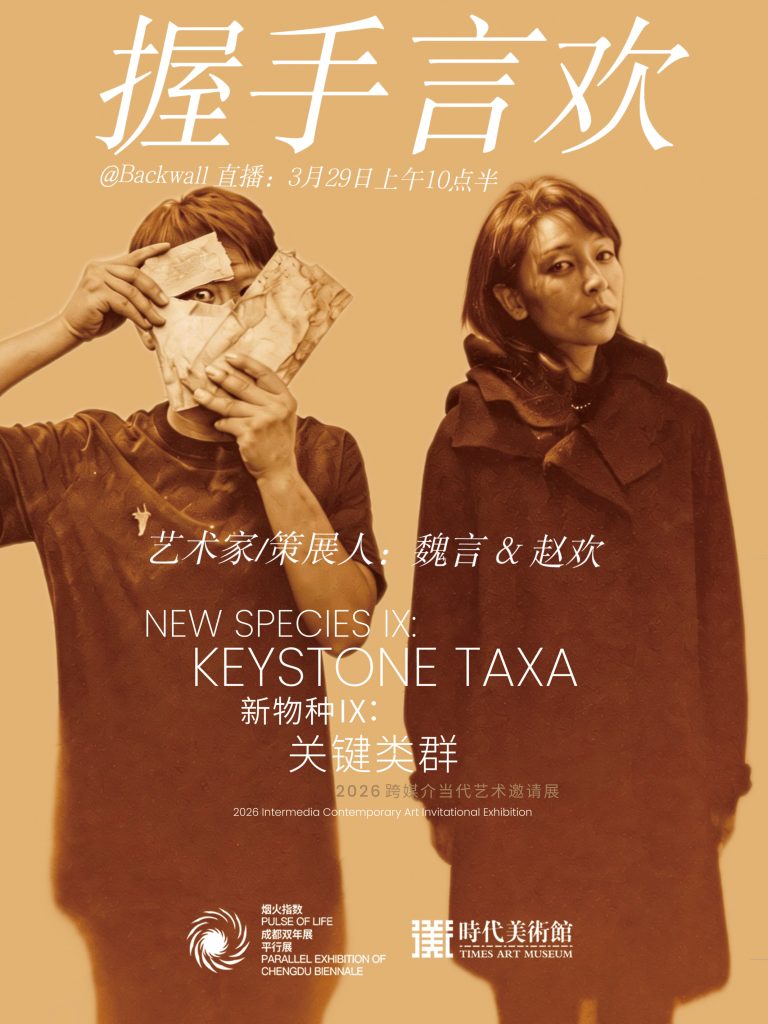
  • Wei Yan × Zhao Huan: When “85 New Wave” Meets “New Species”—Chengdu’s Wildest Side Is Back!

    Wei Yan × Zhao Huan: When “85 New Wave” Meets “New Species”—Chengdu’s Wildest Side Is Back!

    【Intro】 Inside the Chengdu Times Art Museum, a conversation titled “Handshake & Joy” just blew the lid off 40 years of Chengdu’s underground art history. From the 1986 “Red, Yellow, Blue” movement to the 2026 “New Species” exhibition; from the gritty early days of the North Village Independent Factory to world-class installations fit for the Venice Biennale—curator Wei Yan and critic Zhao Huan went deep into the memories that the internet and big capital have tried to “delete.”

    Missed the livestream? No worries. Here are four “hardcore anchors” from the talk that make this one-hour deep dive worth your time.


    📍 Anchor 1: The “Wild Hybrid” — From Rice to Fine Art Believe it or not, curator Wei Yan spent two years obsessively studying hybrid rice. “Why use wild rice to activate domesticated crops?” Wei reveals that this is exactly how “New Species” works. Contemporary art has become too “tame” and hit a bottleneck. To break through, we have to go back to the streets, the ruins, and the overlooked scraps of everyday life to find that raw, “wild gene.” 💡 Video Highlight: Listen to Wei Yan break down the “Origin of Species” for the art world.

    📍 Anchor 2: Chengdu’s “Amputated” History Zhao Huan dropped a heavy question: Why is our history being erased? Even in recent retrospectives of the last 20 years, key DIY spaces like the North Village Independent Factory and re-C art (Langqiao)—the very places that actually supported experimental youth culture—are being left out of the archives. While galleries are getting bigger and exhibitions more “corporate,” the platform for local artists is actually shrinking. 💡 Video Highlight: Zhao Huan and Wei Yan get real about the “spectacle-ization” trap of the Chengdu art scene.

    📍 Anchor 3: A Salute to the “Hermits” of ’85 Marking 40 years of the “85 New Wave,” Wei Yan brought back the pioneers who “vanished.” Think Datong Dazhang holding an exhibition in a coal yard with zero attendees, or Wen Pu-lin’s legendary “Seven Sins” footage. These artists stayed independent while everyone else was chasing the “capitalist shop window.” Their work is a wake-up call to today’s fame-obsessed art world. “When this superficial world rejects you, all that’s left is to look up at the stars alone.” 💡 Video Highlight: Revisit the “epic tragedies” of those who chose dignity over a paycheck.

    📍 Anchor 4: Why This Might Be the “Series Finale” “Everything has its own logic—including the logic of disappearing.” Wei Yan admits he approaches every “New Species” with a sense of “end-times” urgency. Every year, they give it everything, treating it like it’s the final goodbye. If you want to know how a Chengdu curator pulls off a $300k-looking show on a $30k budget, and how to keep creating in an uncertain era, the most honest answers are right here.


    【Watch Guide】

    The academic ambition and the sheer struggle for survival behind this massive cross-media show… it’s all here in this one-hour session.

    👇 Click the video below to watch the “Handshake & Joy” replay. Witness the evolution of Chengdu art on the ruins of the “New Species.”

    Exhibition Info:
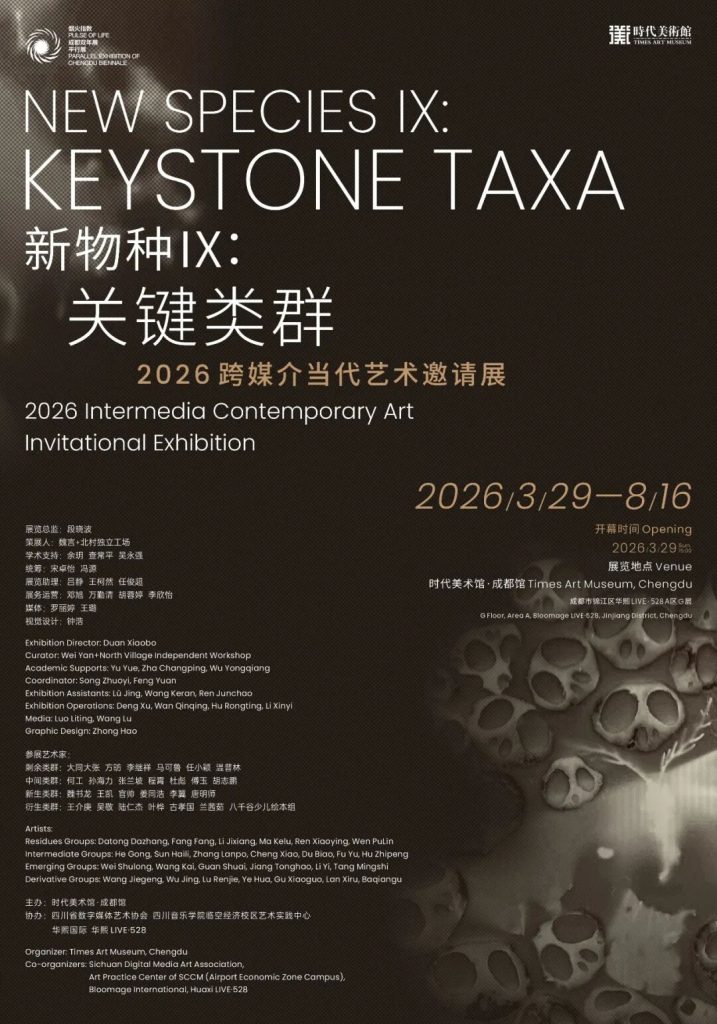
    “New Species IX”: Keystone Taxa
    Curator: Wei Yan x North Village Independent Factory Dates: March 29 – August 16, 2026 Venue: Chengdu Times Art Museum (Huaxi LIVE·528)

    Livestream Guest Lineup

    Wei Yan (Chengdu)

    Curator & Artist A graduate of the Sichuan Fine Arts Institute, Wei Yan currently teaches in the Oil Painting Department at the Chengdu Academy of Fine Arts (Sichuan Conservatory of Music). He is the founder of several influential platforms, including the experimental art collective North Village Independent Factory, the academic exhibition IP “New Species,” and the cultural-creative education brand “Baqiangu.” Having represented Chinese contemporary art in numerous international exhibitions and touring shows, his recent work focuses on the theoretical research and writing of The Art of Residues.

    Zhao Huan (Chengdu)

    Curator & Artist Zhao Huan holds a dual Master’s degree in Fine Arts from the HKU University of the Arts Utrecht (Netherlands) and Royal Free University (UK). She is the founder of re-C Art Space and the He Duoling Art Museum. Additionally, she is the initiator of the “Symbiosis” public art project and the interdisciplinary feminist label “C.sth Art Group.” She has long been a driving force in experimental initiatives that provide exchange, support, and a collective voice for artists.

  • If There Is Sand in Your Heart, Anywhere Can Be the Maldives

    If There Is Sand in Your Heart, Anywhere Can Be the Maldives

    A Visit to He Liping’s Studio in Siyi Village, Chengdu

    On the afternoon of March 4, we visited the studio of Chinese artist He Liping in Siyi Village, Xindu District, Chengdu. The visit is part of the ongoing artist documentation project “Qi Bi Fu – The Rhythm of Creation.”

    Leaving the urban center of Chengdu, the road gradually leads into the outskirts where workshops, studios, and improvised spaces replace the familiar white-cube galleries of the city. Here, art unfolds in slower rhythms—amid dust, time, repetition, and everyday materials.

    He Liping’s studio sits quietly within this rural environment. The space is neither polished nor theatrical; it resembles a workshop more than an exhibition space. Objects, tools, and fragments of past works accumulate naturally around the room, forming an environment where creation appears less like production and more like a long conversation with time.

    “I Never Thought of Art as Something Mysterious”

    During the conversation, He Liping repeatedly emphasized that his understanding of art has always been direct and grounded in everyday experience.

    “I never thought art was something mysterious. It’s actually very simple. It’s about how you see the world.”

    For him, artistic practice is less about constructing symbolic systems and more about maintaining a certain sensitivity toward ordinary reality.

    “Art isn’t about showing how clever you are. It’s about whether you can remain honest.”

    This perspective has shaped the tone of his work for decades—quiet, observational, and sometimes humorous.

    “If There Is Sand in Your Heart, Anywhere Can Be the Maldives”

    One of He Liping’s most widely known works is the 2015 performance piece “If There Is Sand in Your Heart, Anywhere Can Be the Maldives.”

    In the work, the artist created a playful yet ironic situation: instead of traveling to the famous tropical paradise, he staged the idea of the Maldives through a simple symbolic gesture. The work questioned the cultural obsession with exotic landscapes and consumer fantasies.

    Rather than presenting an elaborate spectacle, the piece relied on a conceptual twist.

    “If there is sand in your heart, anywhere can be the Maldives.”

    The sentence quickly circulated online and became associated with the artist’s name. Yet for He Liping, the work was never intended as a slogan—it was simply a reflection on perception.

    The Maldives, in this context, is not a geographic destination but a mental condition.

    The Studio as an Ongoing Process

    Walking through the studio reveals a different aspect of He Liping’s practice. The environment is full of unfinished objects, experiments, and materials waiting to be reworked.

    Unlike artists who emphasize the final form of artworks, He seems more interested in the continuity of making.

    “Here there is no such thing as ‘finished.’ Everything is part of a process.”

    Creation unfolds slowly, sometimes returning to earlier ideas years later. The studio itself becomes an archive of ongoing thoughts.

    Beyond the Studio

    During the conversation, He Liping also mentioned a new personal plan: he hopes to open a small wine bar in the future.

    The idea is not unrelated to his artistic philosophy. For him, conversation, atmosphere, and informal gatherings are part of the broader ecology of culture.

    A wine bar, in his imagination, could become another kind of social space—somewhere between a studio, a living room, and a meeting point for artists and friends.

    Art Outside the White Cube

    Visiting Siyi Village reminds us that contemporary art does not only exist in museums and galleries. Many artists continue to work in peripheral spaces where everyday life and artistic practice remain closely intertwined.

    In He Liping’s case, the studio is not merely a workplace but a living environment where ideas grow gradually.

    Creation here does not rush toward spectacle.

    It moves in a quieter rhythm—
    one stroke rising, another falling—
    an ongoing dialogue between the artist and the world.

  • Finding Clarity in Blur(A Conversation with Artist Meizi)

    Finding Clarity in Blur(A Conversation with Artist Meizi)

    The conversation took place on a quiet afternoon on March 5, under a bright spring sun.

    There was no formal interview structure—no prepared questions, no predetermined conclusions. We simply began by talking about her recent work, and the conversation unfolded slowly from there.

    At times, it felt less like an interview and more like a shared moment of observation.

    Meizi speaks in a measured rhythm. Her sentences often pause halfway, as if she is briefly testing whether the thought she is about to express truly belongs to the moment.

    Those pauses become part of the conversation itself.


    Born in Chongqing and raised in Chengdu, Meizi (You Yumei) originally trained in urban planning and architecture, graduating from Huazhong University of Science and Technology in 1990. For many years she worked at the Chengdu Urban Planning and Design Institute before leaving the profession in the late 1990s.

    She did not begin painting seriously until 2015.

    In another context, this might be considered a late entry into the field. Yet that distance from formal art training has shaped the character of her work. The architectural background remains visible in her sensitivity to line and spatial structure, but her paintings resist the discipline of precision.

    Instead, they gravitate toward something less fixed—toward perception itself.


    At one point during the conversation, she offered a simple observation about how we see other people.

    “When we look at someone in conversation, we never really see them clearly,” she said.
    “We’re not noticing the exact shape of their collar or their eyes.
    What we perceive is more like a vague overall feeling—a kind of tone.”

    For Meizi, painting begins from that condition of uncertainty.

    Rather than reconstructing the world through detail, she is more interested in capturing a fleeting impression—a momentary emotional register that resists precise description.


    Her working process reflects this approach.

    Most of her paintings are completed in a single concentrated sitting.

    “When I paint, I’m completely focused,” she explained.
    “Usually I finish the whole painting in one go.”

    There is little revision. The image emerges in a brief interval of attention, and once that concentration dissipates, the work ends.

    This method gives the paintings a certain immediacy—an image that feels closer to a gesture than a construction.


    In her early years of painting, many works carried a darker emotional tone. She spoke openly about the circumstances surrounding that period: social anxieties, personal pressures, and the long emotional weight of caring for a parent suffering from Alzheimer’s disease.

    Painting became, in her words, “a way of releasing what couldn’t otherwise be expressed.”

    Over time, however, the mood of the work shifted. Paintings gradually became quieter, lighter in tone.

    The change was not intentional.

    “It has a lot to do with how a person changes,” she said.
    “Your way of looking at things changes too.”


    At another moment in the conversation, she offered a line that seemed to capture the underlying logic of her practice:

    “Sometimes blur is what makes the important things clearer.”

    In a culture of image-making that often privileges precision, the statement feels quietly resistant.

    For Meizi, clarity does not necessarily come from control. It may emerge from allowing uncertainty to remain visible.


    Painting has also changed the way she observes the world.

    She spoke about reading more literature and poetry in recent years, describing it as a form of slow self-education. Observation, reading, and painting gradually form a rhythm in her daily life.

    More than anything, she seems interested in whether that process remains alive.

    Not in defining herself as an artist, nor in fixing the meaning of the work, but in maintaining a certain sensitivity to experience.

    As she put it during the conversation:

    Painting is also a way of observing oneself.

    How a line begins,
    where it hesitates,
    when it stops—

    all of these gestures quietly reveal the person one is becoming.


    The conversation ended without a formal conclusion.

    It felt less like a finished interview than a moment in an ongoing process: a person still working, still thinking, still allowing uncertainty to remain part of the work.

    And perhaps that openness is precisely where the work begins.


    Artist: Meizi The conversation took place on a quiet afternoon on March 5, under a bright spring sun.

    There was no formal interview structure—no prepared questions, no predetermined conclusions. We simply began by talking about her recent work, and the conversation unfolded slowly from there.

    At times, it felt less like an interview and more like a shared moment of observation.

    Meizi speaks in a measured rhythm. Her sentences often pause halfway, as if she is briefly testing whether the thought she is about to express truly belongs to the moment.

    Those pauses become part of the conversation itself.


    Born in Chongqing and raised in Chengdu, Meizi (You Yumei) originally trained in urban planning and architecture, graduating from Huazhong University of Science and Technology in 1990. For many years she worked at the Chengdu Urban Planning and Design Institute before leaving the profession in the late 1990s.

    She did not begin painting seriously until 2015.

    In another context, this might be considered a late entry into the field. Yet that distance from formal art training has shaped the character of her work. The architectural background remains visible in her sensitivity to line and spatial structure, but her paintings resist the discipline of precision.

    Instead, they gravitate toward something less fixed—toward perception itself.


    At one point during the conversation, she offered a simple observation about how we see other people.

    “When we look at someone in conversation, we never really see them clearly,” she said.
    “We’re not noticing the exact shape of their collar or their eyes.
    What we perceive is more like a vague overall feeling—a kind of tone.”

    For Meizi, painting begins from that condition of uncertainty.

    Rather than reconstructing the world through detail, she is more interested in capturing a fleeting impression—a momentary emotional register that resists precise description.


    Her working process reflects this approach.

    Most of her paintings are completed in a single concentrated sitting.

    “When I paint, I’m completely focused,” she explained.
    “Usually I finish the whole painting in one go.”

    There is little revision. The image emerges in a brief interval of attention, and once that concentration dissipates, the work ends.

    This method gives the paintings a certain immediacy—an image that feels closer to a gesture than a construction.


    In her early years of painting, many works carried a darker emotional tone. She spoke openly about the circumstances surrounding that period: social anxieties, personal pressures, and the long emotional weight of caring for a parent suffering from Alzheimer’s disease.

    Painting became, in her words, “a way of releasing what couldn’t otherwise be expressed.”

    Over time, however, the mood of the work shifted. Paintings gradually became quieter, lighter in tone.

    The change was not intentional.

    “It has a lot to do with how a person changes,” she said.
    “Your way of looking at things changes too.”


    At another moment in the conversation, she offered a line that seemed to capture the underlying logic of her practice:

    “Sometimes blur is what makes the important things clearer.”

    In a culture of image-making that often privileges precision, the statement feels quietly resistant.

    For Meizi, clarity does not necessarily come from control. It may emerge from allowing uncertainty to remain visible.


    Painting has also changed the way she observes the world.

    She spoke about reading more literature and poetry in recent years, describing it as a form of slow self-education. Observation, reading, and painting gradually form a rhythm in her daily life.

    More than anything, she seems interested in whether that process remains alive.

    Not in defining herself as an artist, nor in fixing the meaning of the work, but in maintaining a certain sensitivity to experience.

    As she put it during the conversation:

    Painting is also a way of observing oneself.

    How a line begins,
    where it hesitates,
    when it stops—

    all of these gestures quietly reveal the person one is becoming.


    The conversation ended without a formal conclusion.

    It felt less like a finished interview than a moment in an ongoing process: a person still working, still thinking, still allowing uncertainty to remain part of the work.

    And perhaps that openness is precisely where the work begins.


    Artist: Meizi (You Yumei)
    Interview recorded by: BACKWALL

  • Heading: After “Chilling Out” at the Biennale, Zhao Huan and German Curator Martin Talk Boredom in 2055.

    Heading: After “Chilling Out” at the Biennale, Zhao Huan and German Curator Martin Talk Boredom in 2055.

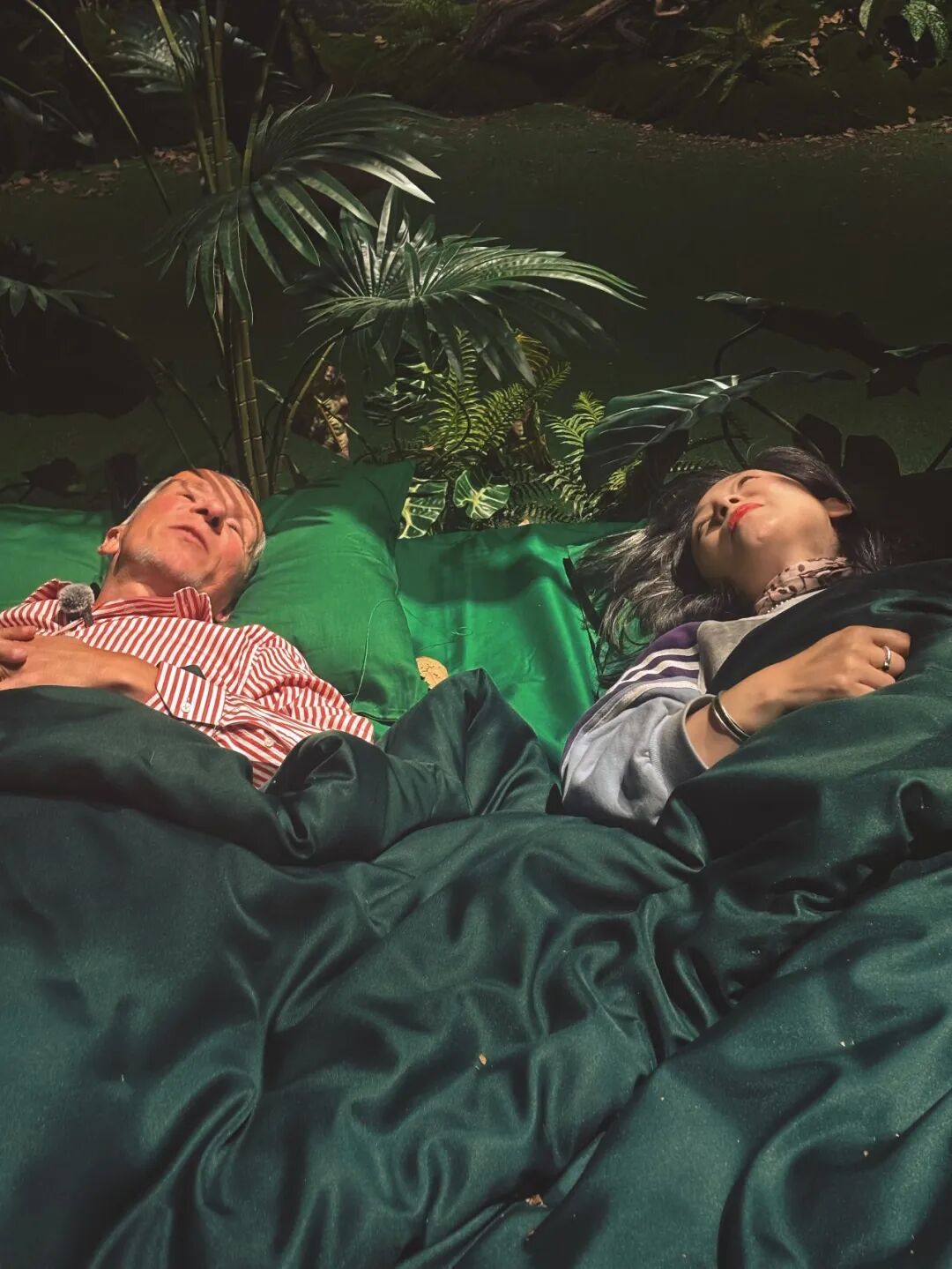
    Intro: In an era where everyone is living life on “2x speed,” we usually hit up art museums just to snag that perfect Instagram shot within 60 minutes. But Martin Rendel says, “Hold on, just lie down first.” When BACKWALL met Martin and our guest curator/artist Ms. Zhao Huan on the 2nd floor of Chengdu Biennale’s Hall A, the conversation didn’t happen in some stuffy conference room. Instead, it kicked off on a massive, rustic, “natural” bed.

    Video address: https://youtu.be/ptTKRzjZCus?si=nTlOLuoYjR7524Vz

    Episode 1: The Dream Begins with a Total “Digital Detox”

    Perched on that wooden bed in Area A1, surrounded by greenery and moving images, Martin dropped an invitation that might actually make most city dwellers a little anxious: “Go ahead, embrace boredom.”

    As a curator who’s constantly hopping between Germany and China, Martin is pretty upfront about his own love-hate relationship with his iPhone. But he’s a firm believer that art shouldn’t just be pixels on a wall—it should be a “sensory sanctuary.”

    “When I’m bored, that’s when my mind can go for a walk.”

    That’s Martin’s logic: only when you unplug from all that information overload can you actually see the shadows of sunlight on the bedsheets, or hear the rhythm of your own breath.

    Video address:https://youtu.be/_mN3QT4IygQ?si=W50-YUVYOCIPtipO

    Episode 2: In 2055, Social Media Might Be History

    Martin took us into a “digital forest” to show us his trilogy, To You in 30 Years. He asked his students to imagine life 30 years from now. Surprisingly, the answer from these digital natives was: “Get back to what’s real.”

    • 1. To You in 30 Years (The Future of Work): It’s a vision of our lives in 2055—less about the grind, and more about finding space to breathe. As technology advances, we have more time than ever. Instead of chasing more distraction, we choose to “let go” and face the silence. It is a future where we move through a world that is finally at peace.
    • 2. urg{end} (The Future of Connection): The Dessau students surprised Martin’s. They said, “By 2055, we want to ditch social media because it feels fake.” They’ve realized that choosing stillness is the ultimate status symbol. They want to embrace boredom, because only when the mind is bored does it gain the freedom to “go for a walk” and find its own meaning. Time is finally ours again.
    • 3. Through the Myriad of Lights (The Future of Existence): In this “luminous world,” light doesn’t belong to machines, but to life itself. It’s a vision where every heartbeat is a lantern, and the city shimmer softly with the rhythm of existence. There is no border between the human and the digital; every being speaks through radiance, dissolving the fragile fences we once believed in. We walk slower and listen deeper, knowing our light reaches others as theirs reaches us.

    Martin showed us a 150-meter-long rope piece to remind us: human civilization is just a tiny red speck at the very end of Earth’s history. In the face of nature, we’re all just passing through. So, what’s the rush?

    Video address:https://youtu.be/LmL_1zwxTUk?si=SaBEBeZOegDXGVCI

    Episode 3: At the Edge of the Black Hole—A Gentle Experiment in “Losing Control”

    The final chapter of our talk went down in the darkest part of the gallery, Area 8—the “Black Hole.”

    There are only two pieces here. Martin says he built this space to help visitors “clean their heads.” After seeing hundreds of loud, busy artworks, you need to hit the “reset” button here.

    What’s most touching is Martin’s respect for “disorder.” In an art museum world that’s usually obsessed with precision and control, he’s actually chasing a “place of anarchy.”

    “I don’t want full control, because a lot of the beautiful things in life happen when you lose control.”

    When 15,000 visitors leave behind their breath, their footsteps, and their traces in the gallery, that’s when the artwork is finally finished. It doesn’t belong to the artist anymore; it belongs to everyone who spent a moment there.

    Outro: Why “BACKWALL”?

    As the interview wrapped up, Martin was curious about the name “BACKWALL.”

    Tan Xiaozheng told him: “Because art always has a wall that people don’t see. We want to take everyone to see the truth behind that wall.”

    Martin cracked a big smile and said it’s just like “behind the scenes” in the movies—the most fascinating part. His hope is that everyone who watches the videos or visits the show takes home more than just photos on their phone. He wants the art to stay with them like a seed—in their minds, or even “stuck in their hair.”

  • Kaili Shangguan × Jingli Gou | A Conversation Before Becoming Oneself

    Kaili Shangguan × Jingli Gou | A Conversation Before Becoming Oneself

    Date: January 29, 2026
    Location: About Time Art Space, Chengdu
    Exhibition: “Hey, Walk a Little Further In” — Jingli Gou Solo Exhibition
    (Jan 11 – Mar 2, 2026)

    This wasn’t a conversation designed in advance.

    It felt more like an open working session—one that was allowed to happen.
    The discussion didn’t always move forward in a straight line, and the speakers weren’t in a rush to reach conclusions. There were pauses, hesitations, moments of checking back: Did I really say what I meant?

    BACKWALL chooses to document moments like these, rather than polish them into something smoother.


    A Solo Exhibition Is Not Ambition — It’s Timing

    For Jingli Gou, this was her first solo exhibition presented entirely as an individual.

    Yet at the beginning of the conversation, she didn’t frame it as a “breakthrough” or a “milestone.” Instead, she described it with a calm sense of judgment: the body of work was ready, the phase had arrived, so the exhibition happened naturally.

    The real pressure didn’t come from the work itself, but from what starts once an exhibition becomes a functioning system—catalog production, layouts, posters, communication, endless confirmations. These tasks aren’t creation, but they are very real parts of an artist’s daily labor.

    After the exhibition opened, she didn’t rush into the next output. She chose to pause and process the feedback—both the positive and the critical. Over time, these responses settle, shaping what comes next.

    It’s a rhythm that doesn’t hurry forward.


    “Style” Is Not What She’s Concerned With

    When the conversation turned to how artistic style is formed, Gou’s response resisted familiar narratives.

    She doesn’t see style as something that needs to be deliberately constructed. For her, what people call “style” is simply what emerges naturally when she works from her own perspective, over time.

    More than how to paint, she cares about what she is trying to say.

    She wants to use language that feels as truthful as possible, to communicate the questions she’s genuinely thinking through—and to create a shared space of recognition with viewers. Not persuasion, but resonance.

    This also explains the recurring use of text in her work. Words aren’t decorative; they step in when images alone can’t carry enough clarity. They become a necessary intervention.


    An Exhibition as Training in Connection

    As a curator and the founder of AVG Space, Kaili Shangguan consistently positioned herself as a companion rather than a judge throughout the conversation.

    She wasn’t focused on evaluating how “complete” the work was. Instead, she spoke about exhibitions as public events—spaces where artists learn how to connect with the outside world.

    In her view, an exhibition is a form of communication training. Feedback isn’t always gentle, but it exists—and it needs to be received, filtered, and understood.

    She also made it clear that intermediaries in today’s art ecosystem are not redundant. Whether curators, agents, or art spaces, these roles aren’t meant to replace the artist’s voice, but to protect artists from being overextended and consumed.


    Where Two Experiences Meet

    What truly happened in this conversation wasn’t a clash of viewpoints, but a quiet alignment of experience.

    One participant stands at the intersection between graduation and a necessary period of creative incubation; the other has long worked alongside young artists, paying close attention to psychological structures and systemic support. Their understanding of instability was remarkably similar.

    Neither felt the need to prove anything quickly. Neither treated an exhibition as a final outcome, but rather as one node in a longer creative path.

    This shared understanding wasn’t loudly declared—it surfaced naturally in the details of the exchange.


    BACKWALL’s Position

    As a documentarian, BACKWALL does not attempt to become the center of the conversation.

    But its position is clear: a resistance to hollow art rhetoric, and a refusal to reduce artistic ecosystems to traffic metrics or commercial outcomes. The value of new media lies not only in monetization, but in long-term documentation, archival presence, and historical meaning.

    Someday, when these materials are revisited, they may serve as important clues for understanding how creative practices took shape in this moment.


    Unfinished Is the Most Honest State

    This conversation did not produce definitive answers.

    What it reveals instead is an ongoing condition—how one becomes oneself, and how patience is maintained within real-world systems.

    Perhaps that’s exactly why it deserves to be recorded.


    Coming Soon | A Series of Short Conversation Films

    The full BACKWALL conversation is currently being edited into a series of short videos.

    Through moving images, you’ll see details that text can’t fully capture: pauses, hesitations, moments of laughter—things that resist being turned into neat “key takeaways.”

    This isn’t a set of summarized lessons, but a conversation still in progress.

    The video series will be released on BACKWALL’s WeChat Video Channel and Xiaohongshu. Stay tuned.

    If you care about how art is actually made in real conditions—not just how it’s discussed—this conversation may be worth continuing to watch.

  • Shaoyan Yu: Becoming an Artist in the Cracks of Time

    Shaoyan Yu: Becoming an Artist in the Cracks of Time

    Shaoyan Yu never rushes to define himself.

    At the beginning of the interview, he makes one thing clear first: “Let’s not make it too serious.”
    He is not good at producing punchlines, nor is he interested in turning his practice into a grand statement. Instead, he prefers to start from lived experience—when he left, where he stayed, and how he slowly arrived at where he is now.

    I. A Timeline: A Path Without Smooth Curves

    Born in 1989 in Yichang, Hubei, Shaoyan Yu received rigorous training in traditional art at an early stage.

    From 2007 to 2011, he studied calligraphy in the Chinese Painting Department at Hubei Institute of Fine Arts, a system rooted in brushwork, structure, and patience.

    “I was trained in traditional art—calligraphy and painting. I’m very sensitive to materials and tactility.”

    After graduation, instead of following an expected trajectory, he chose to leave.

    In 2012, Yu moved to Germany, beginning an eight-year period of study and life abroad.
    During this time, he first studied German, then shifted his focus to photography, completing both undergraduate and postgraduate studies in the field.

    His education there did not emphasize a single stylistic direction, but rather continuous experimentation.

    “During my undergraduate years, we learned everything—darkroom, film, portrait, documentary, even cinema. Every semester I took classes from different professors.”

    This open structure gradually led him to a realization:
    Photography was not merely image-making, but a medium that could enter the system of contemporary art.

    “That’s when I knew I wanted to become a contemporary artist, not just a photographer.”

    In 2020, after completing his postgraduate studies, he returned to China and began his own entrepreneurial path.
    In 2021, he established Shaoyan Yu Art Studio in Shanghai.

    The early years after returning were not easy.

    “I was pretty lost at first. I spent two years as a freelance artist, attending events everywhere, with unstable income, constantly losing money.”

    II. From Artist to Curator: A Turn Shaped by Reality

    A real turning point came when Yu became deeply involved in exhibition operations.

    For a period of time, he participated directly in the daily running of a gallery—handling everything from curatorial work to execution, from artist communication to on-site installation.

    “That year, I did everything—curator, manager, even service staff. The whole gallery was basically run by me alone.”

    It was not romantic, but it was decisive.

    “That year changed my life. I realized that creation wasn’t the only thing I could do.”

    From then on, his working method became clearer:
    Alongside personal creation, he built a sustainable path through curating, exhibition organization, and art event production.

    Today, he works simultaneously in three roles:
    artist, curator, and art project organizer.

    “I can’t give up being an artist, but I also need a way to survive.”

    III. Time as a Continuing Core Theme

    In Yu’s artistic practice, “time” is a recurring subject.

    Yet it is not linear or narrative time, but something perceived, misremembered, and constantly altered.

    In his recent exhibition The Cracks of Time in Chengdu, he experimented with a more abstract approach to image-making.

    “I want to talk about the authenticity of images. What we remember may be real, or it may already have been altered by memory.”

    The works unfold in layers:
    documentation of the real world, material translation, and finally a “virtual image” that is little more than a shadow.

    “When you realize you might be deceived—by others or even by your own memory—you start to question whether the world we live in is entirely real.”

    For Yu, art does not resolve this doubt.

    “I just present this state and let it remain there.”

    IV. Neither Catering to the Audience Nor Avoiding Reality

    Yu is fully aware that different spaces and cities receive works differently.

    “If it’s a museum, I’ll explain things more clearly. In a composite space, I allow the work to be more experimental.”

    He does not aim for universal readability.

    “Simple documentation is fine, but I want to process images one more time. Once it becomes a conceptual image, what you shoot is no longer that important.”

    This explains his constant movement between photography, materials, and installation.
    What matters to him is how images are understood, not which medium they belong to.

    V. Continuing to Work Within the Cracks

    At the end of the interview, Yu does not speak of success or ultimate goals.

    He talks instead about what remains to be done: new chapters, new exhibitions, new modes of collaboration.

    “I’ll continue making new series and presenting them slowly through exhibitions.”

    For him, art is not a final statement, but a long-term process of organizing one’s own experience.

    The cracks will not disappear, and time will not stop.

    All he can do is continue working within them.